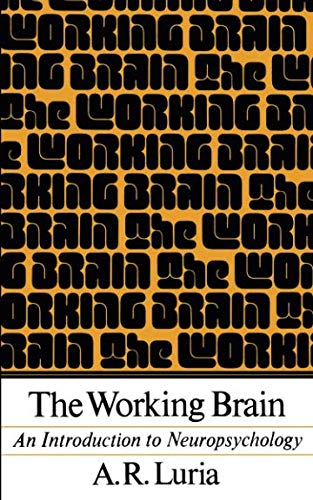
The Working Brain

[ad_1]
Lifetime deals on AI tools & SaaS

[ad_1]
Please Disable Adblock to Show Download Link
DOWNLOAD
Author : Brynn Winegard
Genre : Business & Economics
Summary : Realize a more productive workday by understanding and using your brain better. As news outlets buzz over AI and supercomputers, many professionals feel doomed to fall behind. The most complex, adaptive, and impressive computing technology still ever known exists inside you: your human brain. But how well do you truly understand or use this amazing asset? Popular brain myths and corporate lore have probably held you back from fully leveraging this powerful technology, leaving your professional potential latent. By busting brain myths and relaying the latest insights, Dr. Brynn L. Winegard wants to help you use your brain better to unlock your full potential and realize your most productive self, day, and work life. In The Working Brain, Dr. Brynn draws on her academic research in neuroscience, positive psychology, and corporate career to show you how to get more from your brain while asking less of your willpower. This science-backed practical guide is the missing manual for using your brain better at work and makes the latest brain insights accessible, tangible, and actionable. Understand how to tap into the brain’s inner workings to customize your workday scheduling and sync with your natural rhythms. Discover the best times to work, focus, zone out, and rest, and collect the tips and techniques to fuel, excite, replenish, and stimulate your brain in vital ways at work. With its practical tips, The Working Brain gives you the potential to be more productive, feel more motivated, and perform at your peak all workday long.
Please Disable Adblock to Show Download Link
DOWNLOAD
Author : Aleksandr R. Luria
Genre : Medical
Summary : This important book, by the most distinguished Soviet psychologist of our time, is the product of almost forty years of extensive research aimed at understanding the cerebral basis of human psychological activity. The main part of the book describes what we know today about the individual systems that make up the human brain and about the role of the individual zones of the cerebral hemispheres in the task of providing the necessary conditions for higher forms of mental activity to take place. Finally, Luria analyzes the cerebral organization of perception and action, of attention and memory, or speech and intellectual processes, and attempts to fit the facts obtained by neuropsychological studies of individual brain systems into their appropriate place in the grand design of psychological science.
Please Disable Adblock to Show Download Link
DOWNLOAD
Author : Francesco Signorelli
Genre : Medical
Summary : Functional brain mapping has by now gained a high impact on research and clinical practice: huge funds are unveiled all over the world in order to boost the research and clinical applications of this field of neuroscience. The most successful approach to unlock the mysteries of the brain, to tell it with Jay Ingram, is to bring together an interdisciplinary network of scientists and clinicians and encourage an interchange of ideas. It is this crossfire we try to promote with this book.
Please Disable Adblock to Show Download Link
DOWNLOAD
Author : A. R. Luria
Genre :
Summary :
Please Disable Adblock to Show Download Link
DOWNLOAD
Author : Aleksandr R. Lurija
Genre : Brain
Summary :
Please Disable Adblock to Show Download Link
DOWNLOAD
Author : Walter Glannon
Genre : Medical
Summary : This book is a discussion of the most timely and contentious issues in the two branches of neuroethics: the neuroscience of ethics; and the ethics of neuroscience. Drawing upon recent work in psychiatry, neurology, and neurosurgery, it develops a phenomenologically inspired theory of neuroscience to explain the brain-mind relation. The idea that the mind is shaped not just by the brain but also by the body and how the human subject interacts with the environment has significant implications for free will, moral responsibility, and moral justification of actions. It also provides a better understanding of how different interventions in the brain can benefit or harm us. In addition, the book discusses brain imaging techniques to diagnose altered states of consciousness, deep-brain stimulation to treat neuropsychiatric disorders, and restorative neurosurgery for neurodegenerative diseases. It examines the medical and ethical trade-offs of these interventions in the brain when they produce both positive and negative physical and psychological effects, and how these trade-offs shape decisions by physicians and patients about whether to provide and undergo them.
Please Disable Adblock to Show Download Link
DOWNLOAD
Author : Arlindo Oliveira
Genre : Computers
Summary : How developments in science and technology may enable the emergence of purely digital minds—intelligent machines equal to or greater in power than the human brain. What do computers, cells, and brains have in common? Computers are electronic devices designed by humans; cells are biological entities crafted by evolution; brains are the containers and creators of our minds. But all are, in one way or another, information-processing devices. The power of the human brain is, so far, unequaled by any existing machine or known living being. Over eons of evolution, the brain has enabled us to develop tools and technology to make our lives easier. Our brains have even allowed us to develop computers that are almost as powerful as the human brain itself. In this book, Arlindo Oliveira describes how advances in science and technology could enable us to create digital minds. Exponential growth is a pattern built deep into the scheme of life, but technological change now promises to outstrip even evolutionary change. Oliveira describes technological and scientific advances that range from the discovery of laws that control the behavior of the electromagnetic fields to the development of computers. He calls natural selection the ultimate algorithm, discusses genetics and the evolution of the central nervous system, and describes the role that computer imaging has played in understanding and modeling the brain. Having considered the behavior of the unique system that creates a mind, he turns to an unavoidable question: Is the human brain the only system that can host a mind? If digital minds come into existence—and, Oliveira says, it is difficult to argue that they will not—what are the social, legal, and ethical implications? Will digital minds be our partners, or our rivals?